 how-to
How to Keep Vacation Groceries Fresh: OBX Guide
Table of Contents
- Plan Before You Pack: Vacation Groceries That Last
- How to Store Food Before Vacation
- How to Keep Food Cold While Traveling
- Build a Vacation Grocery List for the Outer Banks
- How to Prevent Food Waste on Vacation
- Departure-Day Checklist: What to Do With Food in the Home
- After You Return: Replenish and Reset
- Frequently Asked Questions
Last Updated: October 12, 2026
Plan Before You Pack: Vacation Groceries That Last
The best way to keep vacation groceries fresh starts before you leave home.
Vacation groceries are the food and drinks you buy for a trip, whether you shop at home or at your destination.
Here's what most guides get wrong: they treat every trip the same. A weekend in Corolla and a two-week stay in Hatteras need completely different plans.
Match Your Grocery List to Your Trip Length
Short trips reward shelf-stable foods. Long trips reward a mix of fresh, frozen, and pantry items.
- Weekend trip (2-3 days): fresh produce, deli meats, bread, and a few easy meals
- One week: add frozen proteins, hardy vegetables, and pantry staples
- Two weeks or more: plan a mid-trip restock, or have groceries delivered
If you're staying in Duck, Southern Shores, or Kitty Hawk for a week, a mid-week top-up keeps produce from going soft.
How to Store Food Before Vacation
Storing food before vacation means prepping what you can at home so it survives the drive and the first days in the rental. A little work up front saves a lot of spoilage later.
Start by clearing space in your fridge and freezer. Then sort your food into three groups: eat now, freeze for later, and pack for the road.
- Check dates on everything in the fridge
- Move soon-to-expire items to the front
- Group items by how cold they need to stay
Temperature Targets That Actually Matter
Set your home refrigerator to 40°F or below and your freezer to 0°F or below before you leave. These are the thresholds food-safety agencies use, and they're the difference between food that's still safe after a week and food that isn't.
If you're leaving for a fall or winter 2026 trip, or any month in 2027, do a temperature check the day before departure. If you're heading to the Outer Banks in June, July, or August 2027, your fridge works harder, so verify it's holding temperature before you load it with vacation groceries.
Food-by-Food Freshness Timelines
Not all foods age at the same rate. Here's a practical guide for what stays fresh and for how long, distinguishing quality from safety:
- Leafy greens: 3-5 days in the fridge. Quality fades fast; safety is fine longer if they're not slimy.
- Berries: 3-7 days. Discard any with mold, mold spreads faster than you'd think.
- Apples and citrus: 2-4 weeks in the fridge. These are your long-haul fruits.
- Root vegetables (carrots, potatoes, onions): 2-4 weeks in a cool, dark place. Keep potatoes and onions separate, they speed each other's spoilage.
Quality and safety aren't the same thing. A slightly wilted carrot is a quality issue; a chicken breast that's been above 40°F for more than two hours is a safety issue. When in doubt, throw it out.
Ethylene: The Hidden Reason Produce Spoils Fast
Some produce releases ethylene gas, which accelerates ripening in nearby items. If you're packing a cooler for a Corolla, Carova 4x4, or Pine Island rental, keep these apart:
- High ethylene producers: bananas, apples, avocados, tomatoes, peaches
- Ethylene-sensitive: leafy greens, broccoli, cucumbers, berries, carrots
Store ethylene producers in a separate bag or container. This one habit can add days to your produce.
Freeze Ahead and Use Airtight Containers
Freezing is the easiest way to keep food from spoiling while you're gone. Cook and freeze meals in advance, then let them thaw in the rental fridge.
Airtight containers and freezer-safe bags keep air out. Air exposure is the main cause of freezer burn and stale food.
- Use freezer-safe containers for soups, sauces, and stews
- Press plastic wrap against the surface of liquids before sealing
- Label everything with the date
- Leave headspace in liquids, they expand as they freeze
For dry goods, Mylar bags and oxygen absorbers extend shelf life on pantry items.
How to Keep Food Cold While Traveling
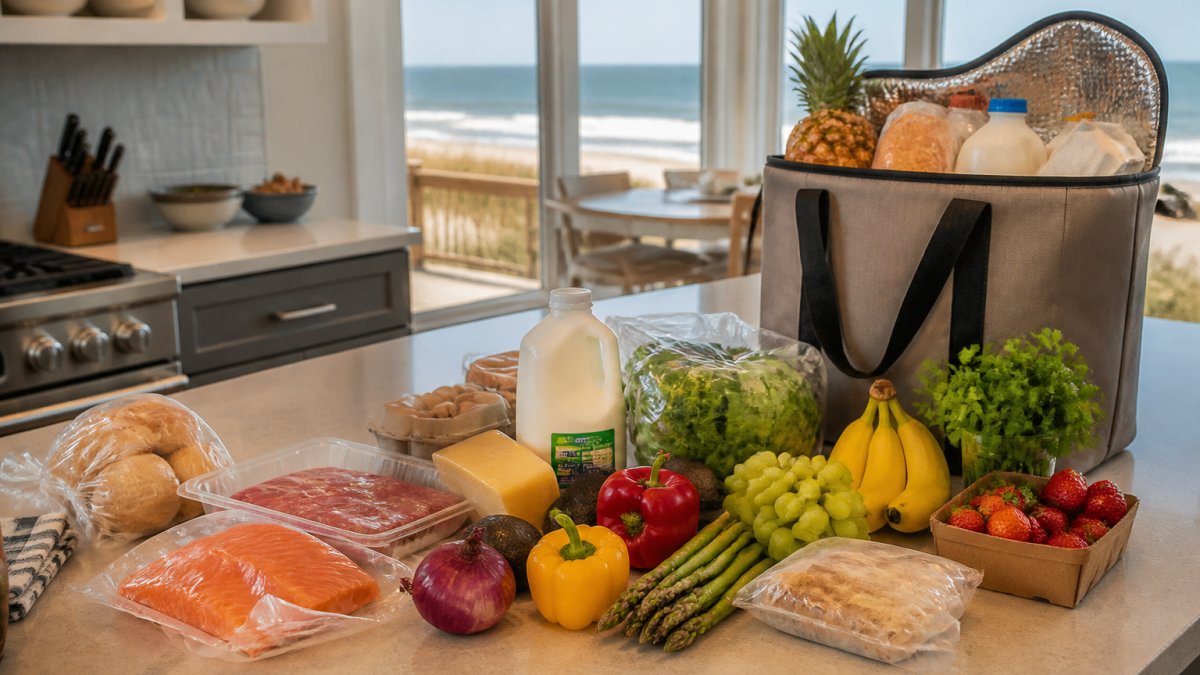
Keeping food cold while traveling comes down to three things: a good cooler, enough ice, and smart packing order.
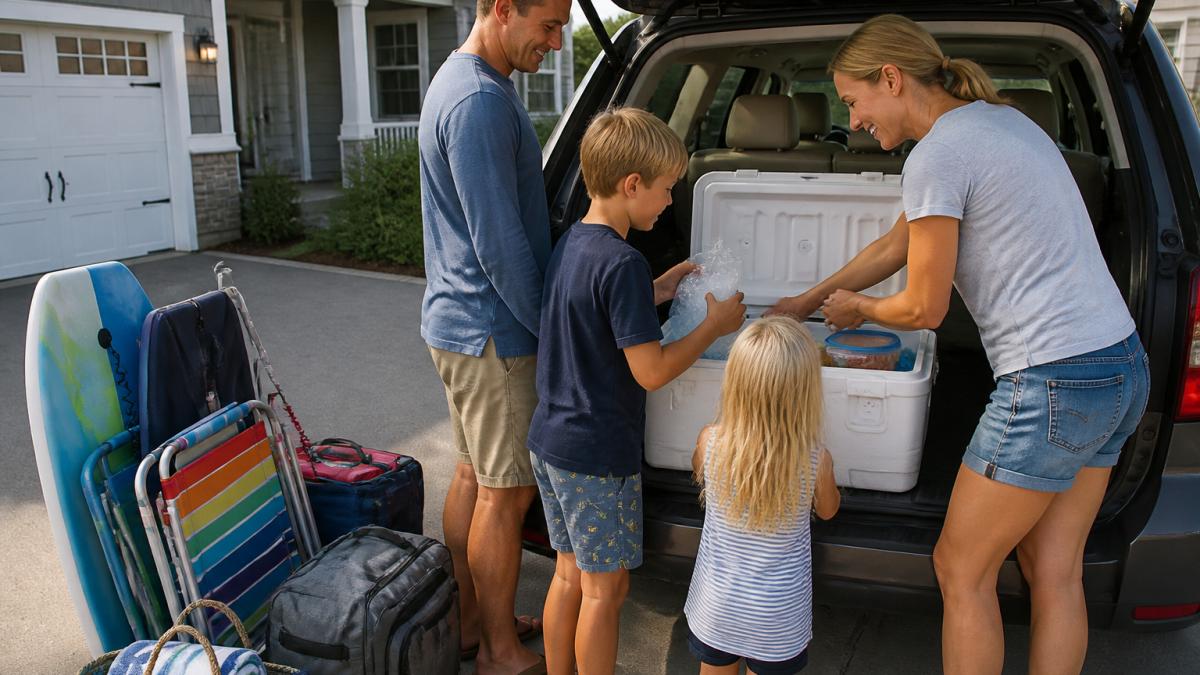
Keep the cooler out of direct sun and closed as much as possible. Every open lid lets cold air escape.
The Two-Hour Rule and Temperature Targets
Perishable food should stay below 40°F. The standard food-safety guidance is that perishable food left above 40°F for more than two hours should be discarded. In summer heat, that window shrinks to one hour.
A cooler thermometer takes the guesswork out. Check it at every stop. If the temperature is climbing above 40°F, add ice or move the cooler into the air conditioning.
Cooler Packing Order and Ice Pack Placement
Layer your cooler so the coldest items sit closest to the ice.
- Bottom: heavy, hardy items like drinks and firm produce
- Middle: meats and dairy in sealed containers
- Top: ice packs and loose ice
- Fill empty gaps with ice packs so cold air can't pool in one spot
For road trips, bring a second small cooler for snacks so you don't open the main one at every stop. Block ice lasts longer than cubed ice; frozen water bottles bridge the gap between the two.
Match Your Cooler Strategy to Your Trip Length
A weekend trip to Corolla or the Currituck Club needs a different cooler plan than a two-week stay in Avon or Buxton.
- Weekend (2-3 days): one well-packed cooler with block ice and frozen water bottles is enough. Skip the frozen meals; you won't need them.
- One week: pack frozen proteins and meals at the bottom, fresh items on top. Plan to restock ice mid-trip if you're in a rental without a full freezer.
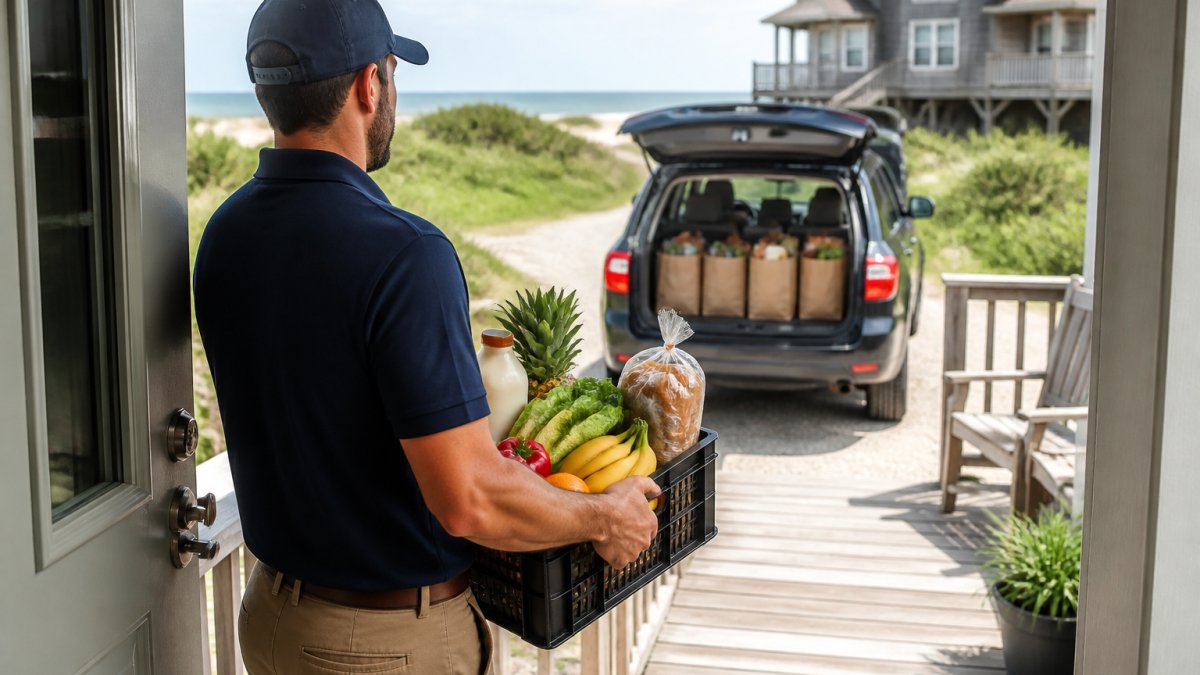
- Two weeks or more: travel with shelf-stable staples and buy perishables on arrival, or arrange grocery delivery to your rental. This is where a pre-arrival delivery to your Rodanthe, Salvo, Waves, or Hatteras Village rental saves you a cooler-packing headache entirely.
Accommodation Matters
Where you're staying changes your cold-storage plan:
- Full kitchen rental: you can travel with more perishables because you have a real fridge and freezer waiting.
- Hotel room or efficiency: bring only what fits in a mini-fridge, and prioritize shelf-stable snacks.
- No fridge at all: skip perishables entirely and rely on a cooler refreshed with ice daily.
For pre-season and post-season getaways, spring or fall 2026, or any month in 2027, cooler temperatures outside work in your favor, but the two-hour rule still applies.
Build a Vacation Grocery List for the Outer Banks
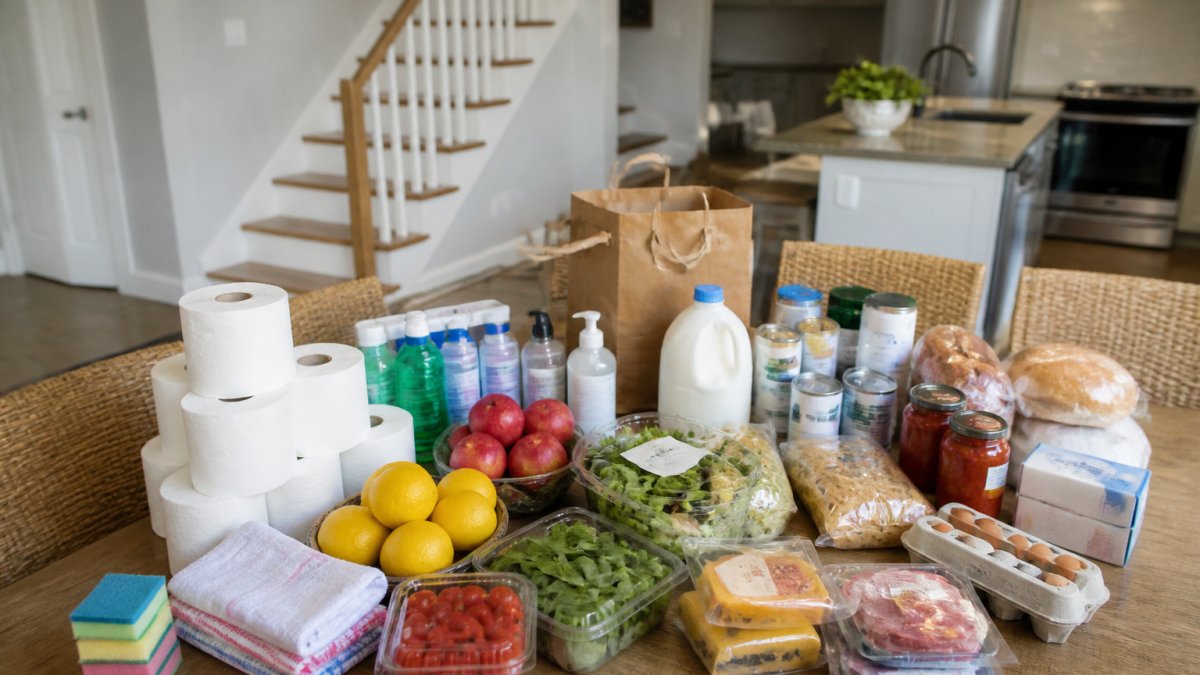
A good vacation grocery list covers breakfast, easy lunches, dinners, and snacks, with a few extras for the beach. Build it around meals you'll actually cook in a rental kitchen.
Here's a starter list that works for most Outer Banks stays:
- Breakfast: eggs, bread, oatmeal, coffee, fruit
- Lunch: deli meat, cheese, tortillas, chips, hummus
- Dinner: chicken, ground beef, pasta, rice, marinara, frozen vegetables
- Snacks: crackers, granola bars, apples, carrots
- Extras: sunscreen-day drinks, ice, condiments, foil, zip bags
If you're hosting a crowd in Nags Head or Corolla, a clambake or chef-prepared meal takes the pressure off one night. We handle full grocery delivery to rentals across the Outer Banks, including Avon, Buxton, Frisco, Hatteras Village, Rodanthe, Salvo, and Waves.
How to Prevent Food Waste on Vacation
Preventing food waste on vacation starts with buying only what you'll use and storing it right. Most waste comes from overbuying and poor storage, not from food going bad on its own.
Plan portions before you shop. If you're cooking for eight, buy for eight, not twelve.
- Shop with a list and stick to it
- Buy loose produce instead of large bags you won't finish
- Cook what you have before buying more
- Keep leftovers in clear containers so you see them
Use, Freeze, Share, or Discard: A Decision Guide
Not sure what to do with food at the end of your trip? Use this simple framework.
- Use it: still fresh and you have a meal left? Cook it tonight.
- Freeze it: won't eat it but it's still good? Freeze for later or take it home.
- Share it: too much to finish? Offer it to neighbors or the rental's next guests if allowed.
- Discard it: any doubt about safety? Throw it out. No meal is worth getting sick over.
Departure-Day Checklist: What to Do With Food in the Home
Before you leave home, walk through the kitchen and deal with every perishable item. This one habit prevents smells, pests, and wasted money while you're away.
- Empty the fridge of anything that will spoil
- Freeze or give away leftovers
- Take out all trash and recycling
- Check the freezer for items that could thaw and refreeze
- Wipe down counters and shelves
If you're heading to the Outer Banks for a fall or winter 2026 trip, or any month in 2027, this checklist keeps your home kitchen clean while you enjoy your trip.
After You Return: Replenish and Reset
Coming home to an empty fridge is normal, so plan a quick restock on your first day back. Check what survived, toss anything questionable, and wipe down shelves before you shop.
- Check dates on pantry items
- Restock basics: milk, eggs, bread, produce
- Clean the fridge and freezer
- Reset the temperature to your normal setting
For your next Outer Banks trip, whether it's a fall post-season escape, ordering groceries ahead means you skip the store and start relaxing sooner.
Frequently Asked Questions
How do you keep groceries fresh in a vacation rental?
Start by refrigerating perishable foods within two hours of arrival. Store fruits and vegetables separately, keep items in airtight containers, and set your rental fridge to the recommended temperature. For longer stays in the Outer Banks, plan a mid-week grocery run or delivery to replenish fresh produce and dairy. Buy only what you will use, and freeze leftovers promptly to extend their shelf life.
How can you keep food cold during a long drive to a vacation rental?
Use a quality cooler with ice packs or block ice, and pack cold items last so they stay chilled longest. Keep the cooler in the air-conditioned cabin rather than a hot trunk. Group frozen items together and fill empty space with extra ice packs. Avoid opening the cooler frequently. For drives to the Outer Banks from inland areas, this keeps perishable foods at safe temperatures for hours.
Should you bring groceries or have them delivered to a vacation rental?
It depends on your trip length and priorities. Bringing staples from home saves money but takes cooler space and planning. Grocery delivery to your Outer Banks rental means your kitchen is stocked on arrival, which saves time and reduces the risk of spoiled food from a long drive. For stays of four days or more, delivery is often the more efficient choice, especially for large groups.
How do you avoid food waste during a weeklong vacation?
Plan meals before you shop and buy only what you need. Use perishable items like fresh produce and dairy early in the week, then rely on shelf-stable and frozen foods later. Store leftovers in airtight containers and label them with dates. If you have excess food before departure, freeze what you can or share with neighbors. A mid-week inventory check helps you use what you have before it spoils.
Planning meals for a rental full of people is a lot of work, especially during the busy May through September 2027 season. Outer Banks Clambakes, Vacation Meals, and Grocery Delivery takes that off your plate with grocery delivery straight to your door, chef-prepared meals, and service across Corolla, Duck, Kitty Hawk, Kill Devil Hills, Nags Head, Manteo, and Hatteras Island. Reserve 2026 dates now and arrive to a fully stocked kitchen.