 blog
blog
Catering Services for Outer Banks Weddings: 2026 Guide
Table of Contents
- What Outer Banks Wedding Catering Actually Involves
- Outer Banks Wedding Catering Cost: What Drives the Number
- Outer Banks Clambake Catering for Rehearsal Dinners and Receptions
- Hiring an Outer Banks Private Chef for Weddings
- Logistics by Island and Venue Type
- Wedding Caterer Questions to Ask Before You Sign
- Frequently Asked Questions
Last Updated: October 7, 2026
What Outer Banks Wedding Catering Actually Involves
Catering services for Outer Banks weddings involve far more than dropping off trays of food.
Outer Banks wedding catering is the practice of providing food, drink, and on-site service for a wedding in the coastal towns and islands from Corolla down to Hatteras Island.
Most planning guides get this wrong: catering is a logistics decision first, a menu decision second.
How Coastal Venues Change the Catering Plan
Wind, salt air, and sand shape every choice a caterer makes here. A buffet that works in a hotel ballroom will fail on an open soundside deck where gusts lift paper plates and tablecloths.
Caterers working here typically adjust in three ways:
- Weighted and covered service stations so food stays put and stays at safe temperatures
- Seafood-forward menus built around what local suppliers can deliver fresh that week
- Backup timing plans for afternoon storms that roll through in minutes
Venues range from oceanfront rental homes to event spaces in Manteo, Kitty Hawk, and Kill Devil Hills. Each type changes how much equipment the caterer brings: a rental home with a full kitchen offers flexibility, while a bare beach access point means everything arrives in a truck.
Outer Banks Wedding Catering Cost: What Drives the Number
Outer Banks wedding catering cost depends on guest count, service style, menu complexity, and travel distance. There is no standard rate, because a plated dinner for 40 at a soundfront home and a clambake for 120 on the beach are entirely different jobs.
Pricing for catering services generally reflects four variables:
- Guest count, the biggest single driver, since food, staff, and rentals scale with headcount
- Service style, drop-off is the least expensive, buffet sits in the middle, plated and stations cost more
- Menu, fresh local seafood and premium cuts raise the per-person figure
Real quotes vary too much by date and venue to publish numbers. Request a current quote and compare line by line, not just the headline per-person rate.
Minimums, Staffing, and Package Inclusions
Minimums are where budgets quietly break. Many catering companies set a food-and-beverage minimum for peak-season Saturday weddings, and some add a separate staffing minimum.
Ask what's included before comparing quotes side by side. A lower per-person rate often excludes rentals, gratuity, or setup that the other quote bundles in.
| What to Compare | Why It Matters | Ask Your Caterer |
|---|---|---|
| Food and beverage minimum | Sets your floor spend | Is the minimum higher on Saturdays? |
| Staffing ratio | Affects service speed | How many servers per guest? |
| Rentals included | Plates, linens, glassware | Are these in the quote or extra? |
| Setup and cleanup | Often billed separately | Is teardown included? |
| Travel and ferry fees | Higher for remote venues | Is there a distance charge? |
| Gratuity and service fee | Frequently overlooked | What percentage is standard? |
Outer Banks Clambake Catering for Rehearsal Dinners and Receptions
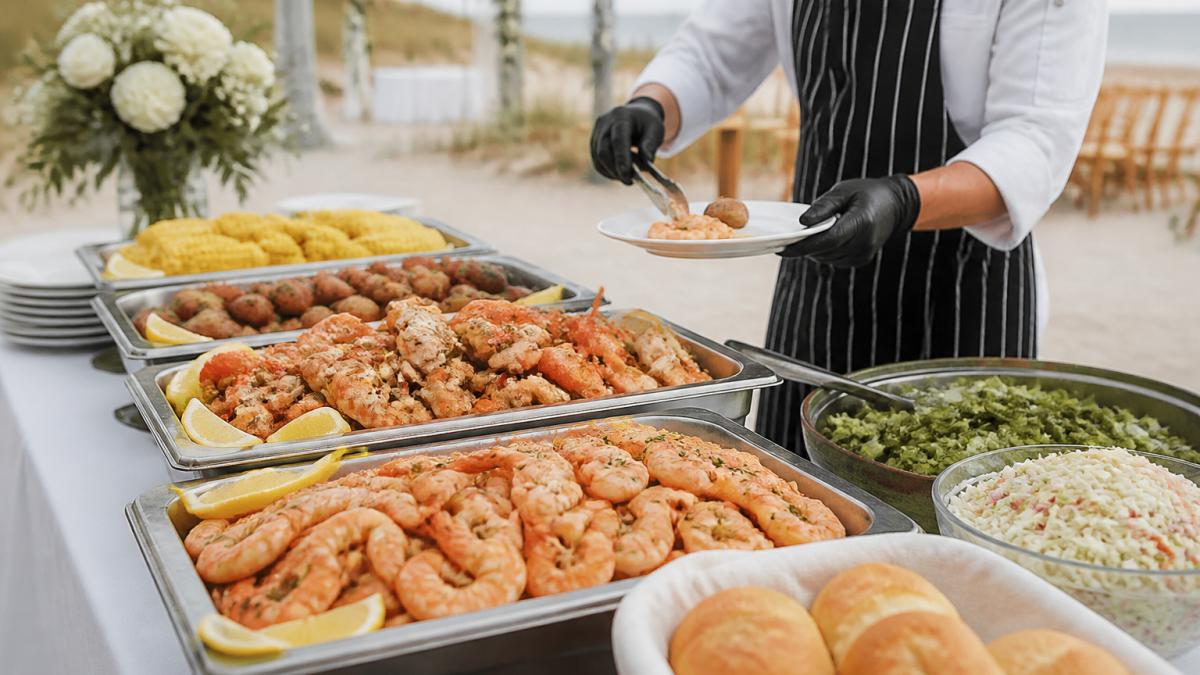
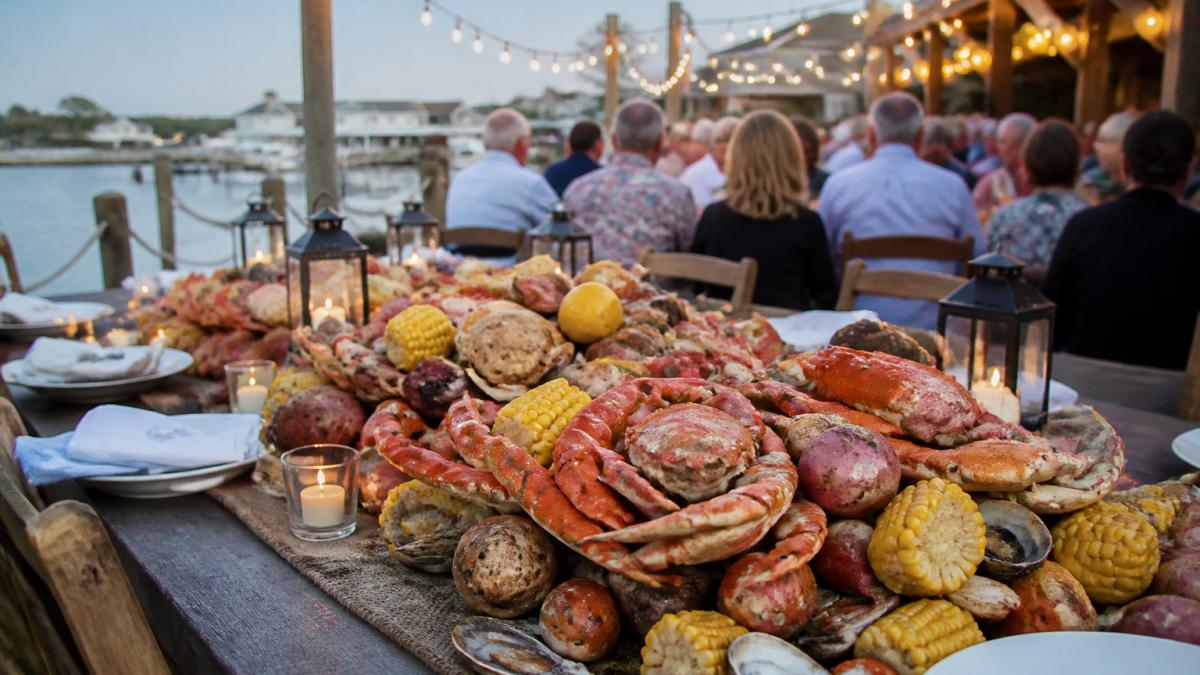
Outer Banks clambake catering brings a regional tradition to wedding weekend: steamed seafood, corn, potatoes, and sausage served family-style at the rental home or venue.
What Actually Comes in a Clambake
A traditional clambake menu is built around a core set of items and then layered with add-ons. Most caterers structure it like this:
- The base: steamed clams, mussels, shrimp, corn on the cob, red potatoes, and smoked sausage, usually cooked together in a seasoned broth
- Common add-ons: snow crab legs, lobster tails, oysters, andouille, or a whole fish
- Sides that travel well: coleslaw, hushpuppies, cornbread, drawn butter, cocktail sauce, and lemon
Because everything steams in batches, a clambake scales more predictably than a plated dinner. A caterer can serve 40 or 150 with the same equipment setup, the difference is pots, batches, and servers passing plates.
Service Style and Guest Count
Clambakes are almost always served one of two ways:
- Family-style at long tables: platters and buckets are set down and guests serve themselves. This is the classic format and works best for 30 to 120 guests.
- Buffet stations: the caterer sets up a steam table and guests file through. This handles larger groups and mixed-ability guests better, but loses some of the communal feel.
For weddings over roughly 150 guests, ask whether the caterer will run two serving lines. A single line for 200 people can take over an hour to clear, pushing your toast and dancing schedule back.
Equipment and Site Requirements
A clambake needs more on-site equipment than a drop-off buffet:
- Large propane burners and stockpots for steaming, which means the caterer needs a level, ventilated outdoor area
- A water source for filling pots and rinsing, or the caterer brings its own
- Tables for shucking and plating, plus covered bins for shells
If your venue is a rental home, confirm outdoor cooking is allowed and the driveway or yard can hold a truck and burner setup. Some oceanfront properties restrict open flame on decks, so the caterer may set up on the ground level or in a parking area. Space constraints often dictate where vendors can operate, so consider how a mobile espresso bar might integrate into these same ground-level service zones to keep your beverage station accessible while respecting local fire ordinances.
Timing: Why the Cook Schedule Drives Your Reception
Steamed seafood is best served immediately, so a clambake caterer schedules the cook around your ceremony or toast schedule. A typical pattern:
- Caterer arrives 2 to 3 hours before service to set up burners and prep
- First batch goes on roughly 45 to 60 minutes before the meal
- Food is dumped and served within 15 to 20 minutes of coming off the heat
- Shell cleanup and breakdown run 45 to 90 minutes after the last plate
Build a 15-minute buffer into your timeline. Wind, a late ceremony, or a slow guest count can push the cook window, and clambake food does not hold under a heat lamp like a plated entrée.
Dietary and Allergen Considerations
Shellfish allergies are common, and a clambake is shellfish-heavy. A caterer who handles weddings regularly will:
- Cook non-seafood entrées in separate pots and on separate surfaces
- Label platters clearly so guests and servers know what contains shellfish
- Offer a vegetarian or chicken alternative at no extra charge, or for a modest per-person add
Ask about cross-contamination practices in writing, especially for severe allergies. This is one area where a clambake requires more planning than a standard buffet.
Hiring an Outer Banks Private Chef for Weddings
An Outer Banks private chef for weddings cooks on site at your venue or rental home, giving you menu control a large catering company can't always match. This route fits smaller weddings, welcome parties, and intimate receptions where a full crew would be overkill.
When a Private Chef Beats a Full Catering Company
A private chef makes the most sense in a few specific scenarios:
- Guest counts under about 40, where a full catering crew's staffing minimum would push the per-person cost up sharply
- Multi-day rental stays, where the chef can cover a welcome dinner, a wedding-day brunch, and a reception across the same booking
- Dietary-heavy guest lists, where several guests need gluten-free, vegan, or allergen-safe plates that a large caterer handles as an exception rather than the norm
Above roughly 50 to 60 guests, the math flips. One chef cannot plate a seated dinner for 80 without a long service window or a team, and at that point a caterer with an established crew is often more reliable.
What a Private Chef Typically Handles
A private chef booking for a wedding weekend usually includes:
- Menu development based on a tasting or a written consultation, with revisions before the event
- Grocery sourcing, often from local seafood markets and produce suppliers, plus specialty items ordered ahead
- On-site cooking in your rental's kitchen or a temporary setup, depending on the venue
Often not included: rentals (plates, glassware, linens), servers, bartenders, and formal staffing. If you want those, ask whether the chef brings a team or coordinates with a staffing vendor.
Capacity: The Question That Decides It
Every private chef has a practical ceiling. A useful rule of thumb:
- 1 chef, no support: comfortable for 10 to 25 guests with a plated or family-style meal
- 1 chef plus 1 assistant: workable for 25 to 50 guests, depending on menu complexity
- 1 chef plus 2 to 3 staff: can handle 50 to 75 guests, but at that point you are essentially hiring a small catering team
Ask any private chef for their maximum guest count for your specific menu, not a general number. A five-course tasting menu for 30 is a different job than a taco bar for 30.
Cost Drivers and What to Confirm in the Quote
Private chef pricing is usually quoted one of three ways:
- Per person, with a minimum headcount
- Flat fee plus groceries, where you reimburse the food cost separately
- Hourly, common for smaller welcome parties and brunches
The biggest variables are menu complexity, guest count, courses, and whether the chef sources premium items like local oysters, crab, or aged beef. Travel time to remote venues and Ocracoke ferry crossings also factor in.
Before you book, confirm in writing:
- Is the grocery cost included or billed separately, and is there a markup?
- Does the quote include servers, or is service self-serve?
- Who provides plates, glassware, and linens?
- Is kitchen cleanup included, and what about the dining area?
- What is the deposit and cancellation policy?
- What is the backup plan if the chef is ill or a ferry is delayed?
Private Chef vs. Full-Service Caterer: A Quick Decision Guide
| Your Situation | Better Fit |
|---|---|
| Under 40 guests, menu-focused | Private chef |
| 40 to 75 guests, seated dinner | Either, depending on staffing |
| 75+ guests, plated or stations | Full-service caterer |
| Multi-day rental, several meals | Private chef |
| Formal reception with bar and rentals | Full-service caterer |
| Heavy dietary needs across the guest list | Private chef or specialty caterer |
The right answer often depends less on the food and more on how much service infrastructure your venue and guest count require.
Logistics by Island and Venue Type
Logistics change block by block across the Outer Banks, and the island your venue sits on shapes your catering plan. A Corolla beach house, a Manteo event space, and a Hatteras Island soundfront property each present different access, power, and travel realities.
Distance matters most for remote venues. The farther south your event sits, the more travel time a caterer builds in, and Ocracoke ferry crossings add a layer inland caterers never face.
Venue type drives equipment needs:
- Rental homes, usually have kitchens, but limited parking and sometimes tight stair access
- Event venues, built for gatherings, but may restrict outside vendors
- Beach and open-air sites, require the caterer to bring everything, including power and shelter
Wedding Caterer Questions to Ask Before You Sign
Ask these questions before signing any catering contract, and get answers in writing. The right caterer welcomes them; the wrong one dodges.
- Have you catered at my specific venue before?
- What is the food and beverage minimum, and does it change by date?
- How many servers will you provide for my guest count?
- Are rentals, setup, and cleanup included in the quote?
- How do you handle dietary restrictions and allergies?
- What is your backup plan for weather?
- What is the deposit, and what is the cancellation policy?
- When do you need a final guest count?
For couples planning ahead, booking timelines matter. Peak-season Saturdays fill early, so start conversations well before your date, and confirm your caterer's availability before you finalize a venue.
Planning a coastal wedding means juggling venues, guest counts, and logistics inland couples never face. Outer Banks Clambakes, Vacation Meals, and Grocery Delivery takes one off your plate with chef-prepared meals, and grocery delivery straight to your rental.
Frequently Asked Questions
What is a reasonable budget for wedding catering on the Outer Banks?
There is no single figure, because pricing depends on guest count, menu style, staffing, and delivery distance. Buffet and family-style service usually cost less per person than plated dinners, and adding a raw bar or clambake raises the total. Ask each provider for a written quote that separates food, labor, rentals, and travel fees so you can compare like for like.
How far in advance should I book catering services for an Outer Banks wedding?
Peak season runs roughly May through September, and popular dates fill early. Many couples book six to twelve months ahead, especially for Saturday weddings. If your date falls on a holiday weekend, start sooner. Off-season dates give you more flexibility and often more vendor availability.
Can you hire a private chef for a wedding at a vacation rental?
Yes, in many cases. A private chef can prepare a rehearsal dinner, welcome party, or small reception in a rental home kitchen, though some rentals limit commercial cooking on site. Check your rental agreement first, then confirm the chef's equipment needs, guest capacity, and whether they handle cleanup and leftovers.
What should you ask a wedding caterer before booking?
Ask about minimum guest counts, deposit and cancellation terms, whether staffing and rentals are included, dietary accommodation for allergies and vegetarian guests, delivery fees by island, and how they handle rain plans for outdoor venues. Request references from weddings at your specific venue, and get every detail in the written contract.